
(The Right Way)
Finding a co-founder for your startup in India means tapping IIT/IIM alumni networks, platforms like YC Co-Founder Matching, Antler India, and Wellfound, plus startup events in Bengaluru, Mumbai, and Delhi. The right co-founder brings complementary skills, full-time commitment, and a shared risk appetite - not just an impressive resume. Always run a 30-day trial project before signing anything.
Why Finding the Right Co-Founder Is Your Most Consequential Startup Decision
Startups with two co-founders receive 30% more investment and achieve 3× the customer growth of solo-founder startups - but 65% of high-potential startups fail specifically because of co-founder conflict.
India crossed 1,80,000 DPIIT-recognized startups in June 2025. The ecosystem has never been more active. Yet the failure rate hasn't dropped - and the number one reason isn't market fit or funding. It's who you build with.
According to research by Noam Wasserman of Harvard Business School, 65% of high-potential startups collapse because of co-founder conflict - disagreements over vision, equity, roles, and commitment levels. Reece Chowdhry, founder of Europe's largest pre-seed fund, put it plainly in December 2025: 'The number one reason companies fail in the first 18-24 months is that founders fall out.'
That's not a people problem. That's a selection problem. You chose wrong from the start.
India's most iconic startups - Flipkart (Sachin and Binny Bansal), Zepto (Aadit Palicha and Kaivalya Vohra), CRED (Kunal Shah, who learned from his Freecharge co-founder experience) - all share one trait: the founding relationship was deliberate, not accidental. This article gives you the framework to be equally deliberate.
What Does a Good Co-Founder Actually Look Like? (5 Non-Negotiables)
A good co-founder has complementary skills, full-time commitment, shared risk tolerance, aligned long-term vision, and clear role boundaries from day one.
Most founders make the mistake of looking for someone who is impressive, not someone who is compatible. Here's the difference - and the five qualities that matter most.
1. Complementary Skills (Not a Clone of You)
If you're a tech founder, you probably don't need another engineer. You need someone who can sell, fundraise, or manage operations. The classic pairing is technical + commercial. Airbnb worked because Brian Chesky and Joe Gebbia (designers) partnered with Nathan Blecharczyk (engineer). The skill gap is a feature, not a bug.
Y Combinator's co-founder advice is consistent: the most successful YC teams have trust, complementary skills, and clear ownership - not identical backgrounds.
2. Full-Time Commitment - No Exceptions
This is the most overlooked co-founder red flag in India: the 'co-founder' who is still at their corporate job and plans to 'join full-time once things pick up.' That's not a co-founder. That's an advisor with hope.
Part-time commitment brings part-time results. Worse, it creates a resentment loop when the full-time founder carries twice the weight at equal equity.
3. Shared Risk Appetite
One founder wants to bootstrap. The other wants to raise a $2M seed round in 6 months. That tension, left unaddressed, becomes a crisis during the first investor conversation. Talk about risk tolerance before you talk about product.
4. Aligned Long-Term Vision
Ask directly: 'Where do you see this company in 7 years?' If one answer is 'acquired by a large corporation' and the other is 'IPO,' you're not aligned. Vision misalignment is the second most common cause of co-founder breakups, behind commitment imbalance.
5. Legal and Ethical Compatibility
India's startup ecosystem has matured enough that corner-cutting has real consequences. Your co-founder's approach to contracts, IP ownership, employee treatment, and compliance will shape your company culture from day one. Don't skip this conversation.
The Venturedu Co-Founder Compatibility Stack™
Score each factor 1–5. Total score below 18 = proceed with caution. Below 14 = stop.
Factor | What to Assess | Score 1–5 |
|---|---|---|
Skill Complementarity | Does your co-founder fill your gaps? | 1 = overlapping / 5 = perfectly opposite |
Commitment Index | Full-time from day 1? | 1 = side project / 5 = quit job today |
Vision Alignment | Same 7-year destination? | 1 = opposing goals / 5 = identical vision |
Risk Appetite Match | Bootstrap vs. VC-backed? | 1 = opposite extremes / 5 = perfect match |
Legal & Ethical Fit | Integrity under pressure? | 1 = concerning flags / 5 = fully aligned |
This framework is original to Venturedu. No top competitor has published a quantified co-founder scoring model for the Indian market.
Where to Find a Co-Founder in India: 7 Proven Channels (Ranked)
The highest-conversion channels for finding a co-founder in India are structured programs (Antler India, YC Matching), alumni networks (IIT/IIM), and startup events - not passive job postings.
Most 'how to find a co-founder' articles list the same 10 platforms without telling you which ones actually work. Here's the honest ranking, based on conversion rate and India-specific context.
1. Antler India - Best for Structured Co-Founder Matching
Antler India (based in Bengaluru) runs a co-founder residency program where solo founders spend 8 weeks finding and validating a founding partnership before Antler invests. Their invite-only 'Before Day Zero' community specifically targets founders 3–6 months from launch. Their February 2026 residency offers up to $1 million in AI-relevant resources on top of the investment check.
If you're serious, this is the most structured path. You meet high-quality candidates in a pressure-tested environment with mentors watching.
2. Y Combinator Co-Founder Matching - Best Free Global Platform
YC's Co-Founder Matching platform has made over 100,000 introductions globally. It's free, well-structured, and attracts ambitious founders specifically looking to build. Indian founders use it consistently - and YC's Spring 2025 batch had significant Indian representation.
The platform lets you filter by location, industry, and technical/non-technical background. Start here if you want options.
3. IIT and IIM Alumni Networks - Best for Trust and Credibility
IIT and IIM alumni are behind more than two dozen Indian unicorns, have raised over $36 billion in VC funding, and account for nearly one-third of India's top 200 high-growth startup founders (NASSCOM/Tracxn, 2025). These networks carry built-in trust signals - both for your co-founder search and for future fundraising.
Use alumni association portals, LinkedIn alumni groups, and in-person meets. Don't underestimate WhatsApp groups - many IIT/IIM networks have active startup channels where co-founder requests get genuine responses.
4. Startup Events in Bengaluru, Mumbai, and Delhi - Best for Real-World Vetting
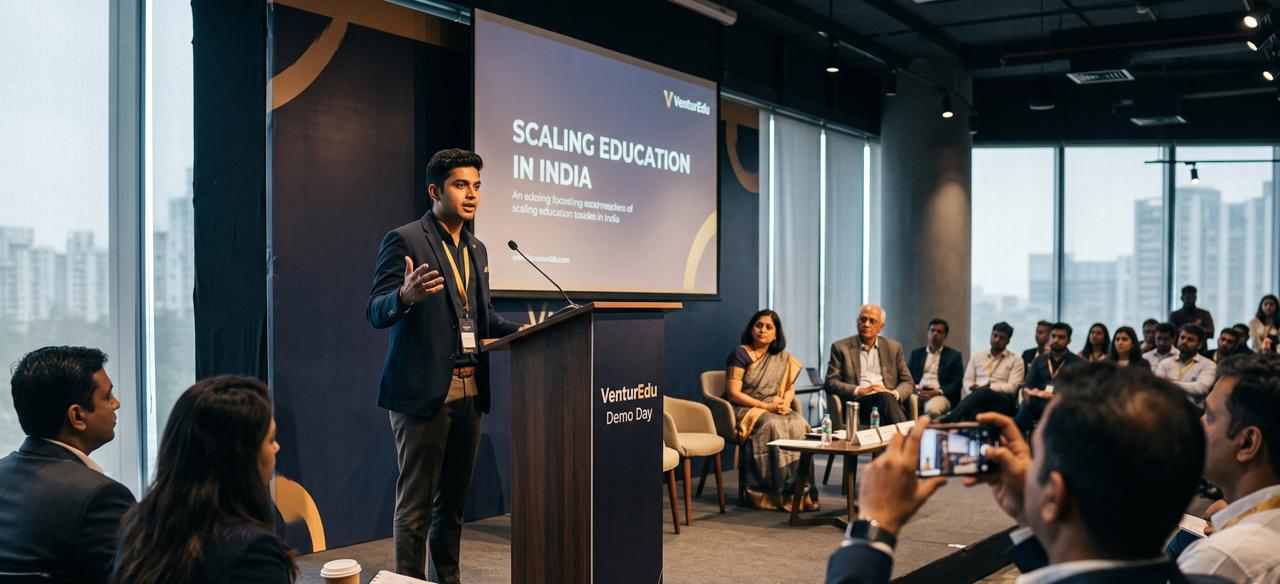
Accelerator demo days, product meets, and startup community events (like those run by Nasscom, TiE, and BITS Alumni) let you observe how people think in real time - which no platform profile can replicate. Target cities: Bengaluru (India's startup capital), Mumbai (fintech and media), and Delhi-NCR (deep tech and enterprise).
5. Wellfound (formerly AngelList) - Best for Technical Co-Founders
Wellfound has a dedicated co-founder search section and is strong for finding technical co-founders who are already embedded in the startup ecosystem. The signal-to-noise ratio is higher than general job platforms because everyone on the platform is startup-native.
6. StartupIndia Hub - Best for Government-Sector Founders
Launched by the Government of India, StartupIndia Hub connects founders with co-founders, investors, and accelerators. It's particularly useful if your startup operates in regulated sectors (agritech, edtech, govtech) where DPIIT recognition matters.
7. LinkedIn - Biggest Reach, Requires Most Filtering
LinkedIn has over 100 million users in India - the largest English-language professional network in the country. The challenge is filtering. Use Boolean search, join founder-focused groups, and post a specific 'co-founder search' post outlining the gap you're trying to fill. Vague posts get vague responses.
Quick Comparison: Co-Founder Channels at a Glance
Platform | Best For | India Presence | Cost | Quality Signal |
|---|---|---|---|---|
Antler India | Structured matching | Bengaluru (strong) | Free to apply | 5/5 |
YC Co-Founder Matching | Ambitious founders | Global + India | Free | 5/5 |
IIT/IIM Networks | Trust + pedigree | PAN-India | Free (alumni) | 5/5 |
Wellfound | Tech co-founders | Good India pool | Free | 4/5 |
StartupIndia Hub | Regulated sectors | India-only | Free | 3/5 |
Wide reach | 100M+ India users | Free / Premium | 3/5 |
How to Approach a Potential Co-Founder (Without Sounding Desperate)
Lead with your traction, not your pitch. Share what you've already built or validated, explain the exact gap you're hiring for, and ask for a small trial collaboration before any commitment.
Most founder outreach fails because it reads like a cold sales email. 'I have this great idea, want to be my co-founder?' gets ignored. Every day.
Here's what works:
Start with a specific hook. 'I've been talking to 40 founders in the D2C space and found this one gap that 30 of them mentioned...' is infinitely more interesting than 'I have an idea for a startup.'
Lead with what YOU bring. Instead of 'I need a tech co-founder,' say 'I have 3 LOIs from paying customers and distribution access via my prior role at Marico. I'm looking for someone who wants to build the product layer.'
Propose a low-commitment test. Don't ask for a co-founder on the first conversation. Ask for a one-week sprint to solve a specific problem together. Let the work do the talking.
Be specific about the gap. 'I need a co-founder who can run engineering while I handle GTM' converts better than 'I need a technical co-founder.'
Follow up exactly once. If they don't respond to your follow-up, move on. Founders who are interested move fast.
How to Vet a Co-Founder Before Committing: The 30-Day Trial Framework
Before signing any equity or shareholder agreement, run a 30-day co-founder trial - build a real deliverable together and evaluate under genuine pressure.
Dating apps have 'super likes.' Startups have co-founder agreements. Both get misused. The solution is a structured trial period that creates real data about compatibility before you're legally entangled.
The 30-Day Trial Framework (original to Venturedu):
Week 1 - Values Audit: Have three deep conversations: about past failures, about money and risk, and about what 'winning' looks like in 7 years. Look for consistency across different contexts.
Week 2 - Skill Validation: Assign a real task that requires the skill they claim. If they say they can 'handle fundraising,' have them draft a cold investor email and investor update. Judge the output, not the confidence.
Week 3 - Pressure Test: Introduce a real obstacle - a customer rejection, a technical failure, a competitive threat. Watch how they respond. Founders who blame external factors in week 3 will do worse under Series A pressure.
Week 4 - Negotiation Practice: Discuss equity split, roles, and what happens if one person wants to exit in year 2. If this conversation is impossible now, it will be catastrophic later.
"The best co-founder decisions I've seen come from people who worked together for 30-60 days before signing anything. The worst comes from people who bonded at a hackathon and gave each other equal equity the next morning." - Common pattern observed across early-stage accelerators, 2025
How to Split Equity With Your Co-Founder in India
Most two-person founding teams in India should aim for a near-equal split (45/55 or 50/50) with a 4-year vesting schedule and a 1-year cliff - documented in a Founders Agreement, not just a verbal understanding.
Carta's 2024 data shows that 45.9% of two-person founding teams now split equity equally - up from 31.5% in 2015. The shift reflects a broader understanding that both founders are equally taking on career risk, and that perceived 'fairness' matters more than a slightly unequal split that breeds resentment.
That said, equal isn't always right. Consider these factors before deciding:
Time invested before founding: If one founder spent 6 months building the MVP while the other was still employed, that gap deserves acknowledgment.
Capital contribution: If one founder is personally funding early operations, a small differential (say, 55/45) can reflect that.
Domain expertise premium: In sectors like biotech or deep tech, a founder with rare domain IP may warrant 5-10% more than a pure commercial co-founder.
Full-time commitment timing: If one co-founder joins 3 months after the other, start the vesting clock from their actual join date - not a backdated date.
Critical for India: Verbal equity agreements, even when confirmed by email, are not enforceable under Indian company law. Your equity split must be documented in a signed Founders Agreement and reflected in the company's cap table from Day 1. A one-time legal consultation (₹15,000–₹40,000) is not optional - it's cheap insurance against a ₹10-crore dispute in year 3.
Standard vesting structure: 4-year vesting with a 1-year cliff. This means your co-founder earns nothing if they leave within the first year, then vests quarterly after that.
Co-Founder Red Flags That Look Fine Until They Don't
The most dangerous co-founder red flags are subtle: part-time commitment disguised as 'transition planning,' equity asks without role clarity, and communication styles that work in agreement but break under disagreement.
You'll miss these if you're too excited about finally finding someone who shares your enthusiasm.
Still has a full-time job with 'no plan' to leave: This isn't caution - it's a commitment gap. If your company isn't worth quitting for before you sign, what changes after?
Wants a title before a role definition: 'I should be the CEO/CTO' before 'Here's what I'd own in the first 90 days' is an ego signal, not a leadership signal.
History of unfinished projects: One abandoned project is normal. Three is a pattern. Ask directly: 'What's something you started and didn't finish, and why?'
Avoids the equity conversation: Founders who say 'we'll figure out equity later' are either conflict-averse or have unrealistic expectations. Both are problems.
Disagrees on what 'success' looks like: If they want a lifestyle business and you're building for a ₹1,000-crore exit, you're not co-founders - you're two people with a shared bank account and different destinations.
No references who will actually talk to you: Ask for references from past professional collaborators, not friends. Then actually call them. This step alone eliminates 20% of bad fits.
The Venturedu Angle: Why the Right Co-Founder Outperforms an MBA
India's top startup founders increasingly come from backgrounds that prioritize execution over credentials. You don't need an IIM degree to find a great co-founder or to be one - but you do need the business frameworks that those programs teach.
This is the gap Venturedu was built to close. While traditional MBA programs take 2 years and ₹20–40 lakhs, Venturedu delivers startup-grade business education for founders who want to move fast. The goal: equip you with the vocabulary, frameworks, and strategic thinking that attract serious co-founders and impress early investors.
A technically strong founder who can speak the language of unit economics, CAC/LTV, and market sizing will attract a higher-quality co-founder than one who just has an idea. That's the Venturedu thesis.
Also read: Why Founders Are Choosing Venturedu Over MBA Programs
Frequently Asked Questions
Q: How long does it typically take to find a co-founder in India?
Finding a co-founder in India typically takes 2–6 months when using structured platforms like Antler India or YC Co-Founder Matching. Founders who rely only on passive networking or personal circles often take 9–18 months. Running a parallel search across 3 channels simultaneously cuts time to match by roughly 40%.
Q: Can I find a co-founder without an IIT or IIM background?
Yes. India's startup ecosystem has shifted significantly - unicorns like CRED (Kunal Shah, DU dropout), Meesho (IIT Roorkee, not the big 5 IITs), and Urban Company all prove that execution and market insight outweigh pedigree. Platforms like Antler India specifically evaluate founders on vision clarity and domain expertise, not alma mater.
Q: Is it okay to have a co-founder who is a close friend?
It can work, but friendship is not a business partnership vetting process. The biggest risk is that friendship creates a conflict-avoidance dynamic - you avoid difficult conversations about equity, roles, and underperformance because you value the relationship. Treat the friendship as a starting point, then run the 30-day professional trial regardless.
Q: What equity should I give my co-founder if I had the original idea?
Ideas are worth almost nothing without execution - this is a near-universal truth in venture capital. If your co-founder is joining at founding stage with full-time commitment, an equal or near-equal split (45/55 or 50/50) is standard. The Carta 2024 data shows 45.9% of two-person teams split equity equally. A 10% differential for 'having the idea' typically creates resentment within 18 months.
Q: What's the difference between a co-founder and an early employee?
A co-founder takes equity and career risk at the founding stage - they work without a guaranteed salary, are involved in strategic decisions, and typically have a title like CEO, CTO, or CPO. An early employee joins with a salary and receives ESOP (typically 0.25%–2%). If someone wants a salary from month 1, a defined role, and no equity risk - they're an employee, not a co-founder.
Q: Is Antler India worth it for finding a co-founder?
For founders who want a structured, high-quality matching environment with institutional backing, Antler India is the strongest India-specific option as of 2025. The program invests ₹~75 lakhs for 10-15% equity, and the 8-week residency model means you test chemistry before any legal commitment. The main trade-off is giving up equity at a very early stage.
The Bottom Line on Finding a Co-Founder in India
Finding a co-founder for your startup in India isn't about finding someone as excited as you are. It's about finding someone who balances what you're not - technically, commercially, and temperamentally.
Use structured channels (Antler, YC Matching, IIT/IIM alumni networks) over passive approaches. Apply the Compatibility Stack before you're emotionally invested. Run a 30-day trial before signing equity. Document everything in a Founders Agreement on day one.
Key Takeaways
Startups with co-founders are 3× more likely to succeed - but 65% fail due to co-founder conflict. Selection is everything.
The 5 non-negotiables: complementary skills, full-time commitment, shared risk appetite, aligned vision, and legal/ethical fit.
Top India channels: Antler India, YC Co-Founder Matching, and IIT/IIM alumni networks - in that order for quality of signal.
Run a structured 30-day trial before any equity agreement. Let real pressure reveal real character.
Document equity splits in a Founders Agreement from Day 1. Verbal agreements are not enforceable in India.
Ready to become the kind of founder who attracts top co-founder candidates? Venturedu's startup-focused learning programs give you the business frameworks, fundraising vocabulary, and strategic thinking that serious co-founders look for.